

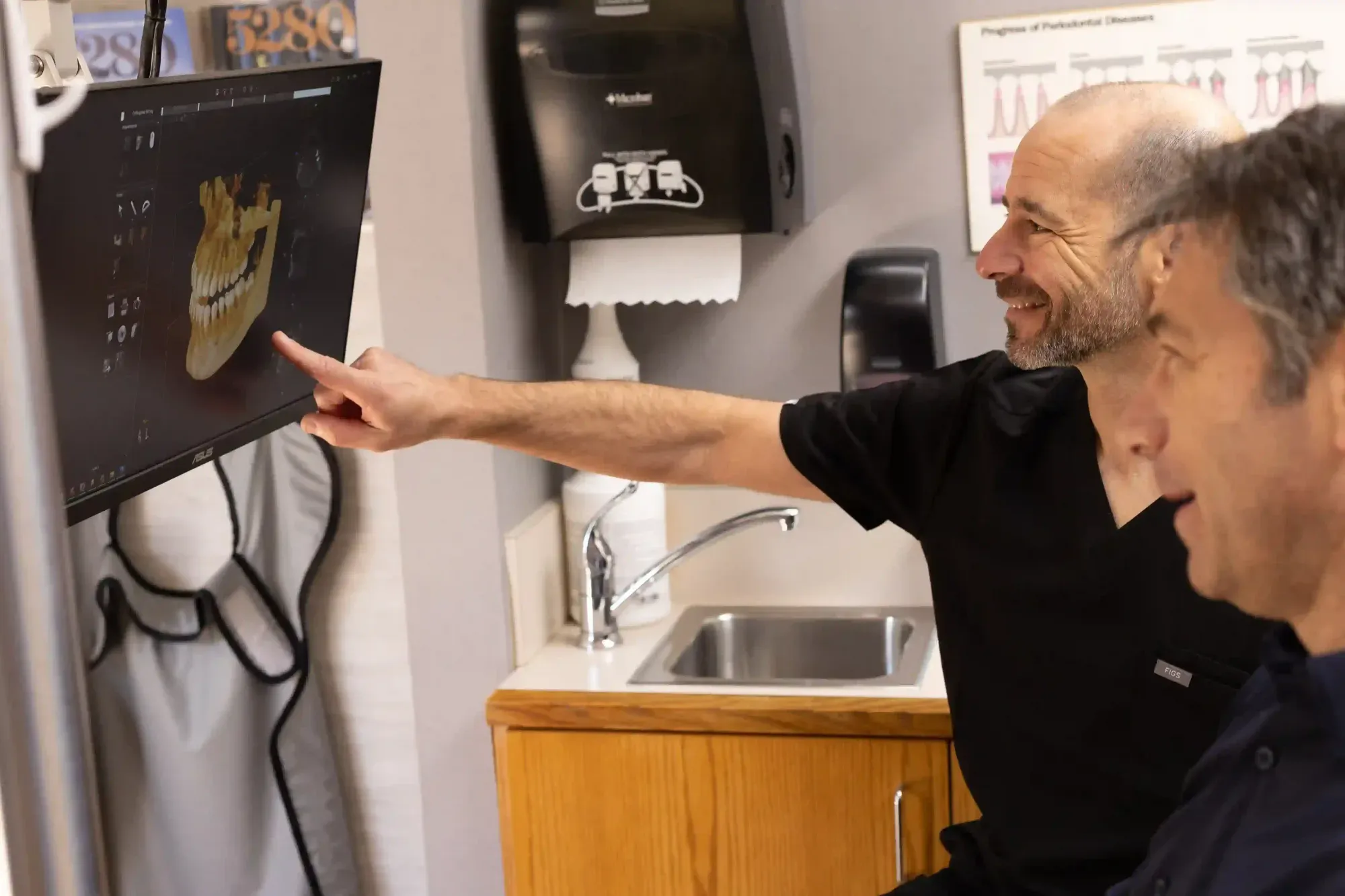
Aurora’s rapid growth along the I-225 and E-470 corridors has brought thousands of new residents—many searching for a trusted dental provider who can deliver immediate cosmetic corrections without the multi-visit commitment. If you’ve been putting off fixing that chipped front tooth or closing a minor gap because you assume it requires veneers or orthodontics, dental bonding offers a same-day alternative that fits the pace of life near Fitzsimons, Southlands, or the Anschutz Medical Campus.
As part of our comprehensive dental services in Aurora, we’ve refined our bonding technique to address the specific concerns we hear most often from families relocating to the area: “Can it be done in one visit?” and “Will it look natural under Colorado’s intense sunlight?”
Colorado’s Board of Dental Examiners requires that all composite resin materials used in cosmetic procedures meet specific biocompatibility standards under Rule 3 CCR 711-1. At Aspenwood Dental, we use only FDA-approved, BPA-free composite systems and maintain compliance with Aurora’s municipal health inspection protocols for infection control—a detail that matters when you’re trusting someone to work inches from your face.
Our Four-Step Bonding Protocol
Step 1: Custom Shade Blending
We don’t just pick a color from a chart. Using advanced shade-matching technology available at our Aurora clinic, we carefully blend composite resins to match the exact translucency, opacity, and undertone of your surrounding teeth—accounting for Colorado’s high-altitude UV exposure that can affect enamel appearance.
Step 2: Surface Conditioning
We gently etch and prime the tooth surface using a phosphoric acid gel to create microscopic channels. This ensures a chemical and mechanical bond strong enough to handle daily function—whether you’re biting into a breakfast burrito from Rosenberg’s Bagels or opening packaging at your desk near the Anschutz campus.
Step 3: Layered Sculpting and Shaping
This is where clinical artistry meets structural integrity. Your provider applies the composite resin in thin, stratified layers, hand-sculpting the material to replicate the natural anatomy of your tooth—including subtle grooves, contours, and translucent incisal edges. Each layer is light-cured using a specialized UV lamp before the next is added.
Step 4: Final Polishing and Occlusal Adjustment
We finish by smoothing and buffing the bonded material to a high gloss, then checking your bite alignment to ensure the restoration integrates seamlessly with your natural tooth structure. You leave our Aurora office with a result that looks, feels, and functions like natural enamel.
Related Services
Dental bonding is ideal for minor cosmetic corrections, but it’s often part of a broader smile transformation. If you’re considering multiple adjustments or have more extensive cosmetic goals, you may also benefit from:
- Veneers in Aurora – For more comprehensive coverage of discoloration, chips, or alignment issues that bonding alone can’t address.
- Teeth Whitening in Aurora – To brighten your entire smile before or after bonding, ensuring a uniform shade across all visible teeth.
- Smile Makeover in Aurora – A coordinated treatment plan combining bonding, contouring, and other cosmetic procedures for a complete transformation.
We’ll discuss all relevant options during your Aurora consultation to ensure you’re pursuing the most effective path for your goals.
Is Dental Bonding Right For You?
If you have generally healthy teeth and gums—free from active decay or periodontal disease—and want to address minor cosmetic concerns like chips, gaps, or surface discoloration, bonding is often the ideal starting point. During your Aurora consultation, we’ll perform a thorough examination to confirm you’re a suitable candidate.
A Few Factors to Consider
✓ Durability: While composite bonding is remarkably strong, it’s not as fracture-resistant as porcelain. If you have a history of nighttime grinding (bruxism), we may recommend a custom nightguard fabricated at our Aurora lab to protect your investment.
✓ Shade Matching: We can match bonding material to your current tooth shade with remarkable precision. However, if you’re planning to whiten your teeth, we recommend doing so before bonding—whitening agents don’t affect composite resin.
✓ Lifespan: Bonding typically lasts 3–7 years with proper care. It’s not as durable as crowns or veneers crown, but it’s also far less invasive and more affordable.
Preparing for Your Aurora Appointment
Dental bonding requires minimal preparation. At your consultation, we’ll discuss your goals, evaluate your tooth structure, and answer any questions about the process or expected results.
Anesthesia is rarely necessary unless the tooth being bonded has decay near the nerve or requires significant reshaping. Most bonding procedures are completed comfortably without numbing, allowing you to drive yourself home and return to work immediately after.
The Recovery and Aftercare
There is no recovery period after dental bonding. If we used local anesthesia for any reason, you’ll need to wait 1–2 hours for the numbness to subside before eating. Otherwise, you can resume all normal activities—including eating and drinking—immediately.
Maintaining Your Bonded Teeth
Caring for bonded teeth is identical to caring for natural teeth:
- Brush twice daily with a non-abrasive fluoride toothpaste
- Floss once daily, taking care around the bonded area
- Avoid biting hard objects (ice, pens, fingernails)
- Limit staining agents (coffee, red wine, tobacco)
- Visit our Aurora office every six months for professional cleanings and polishing
Getting Accustomed to Your Bonded Tooth
Immediately after bonding, your tooth may feel slightly different when you run your tongue over it or when you bite down. This is completely normal. Most patients forget about the bonding entirely within 2–3 days as they adapt to the new contour.If you notice any sharp edges or bite discomfort, call our Aurora office at (303) 835-4207. Minor adjustments can be made quickly and comfortably.
Arrange Your Visit Today!
Ready to schedule your family’s dental appointments? If so, please call Aspenwood Dental Associates and Colorado Dental Implant Center. Our family dentist in Aurora, CO, serves patients in greater Colorado. Some even come as far as Denver and Centennial!
or call (303) 529-2913
FAQ: Dental Bonding in Aurora
How long does dental bonding last?
With proper care and the right conditions, composite bonding typically lasts 3–7 years. Chewing ice or nighttime grinding can accelerate minor surface wear or chipping, so we may recommend biannual polishing during your routine cleanings at our Aurora office.
Can I get dental bonding done during my lunch break near Fitzsimons?
Absolutely. Most bonding procedures require only 30–60 minutes per tooth and involve no recovery time. We frequently schedule express cosmetic appointments for professionals working near the Anschutz Medical Campus, Fitzsimons, or Southlands.
Does dental bonding stain more easily than natural teeth?
Modern composite resins are highly stain-resistant, but they’re not immune. Coffee, red wine, and tobacco can discolor bonding material over time—just as they would natural enamel. We recommend limiting exposure to staining agents and scheduling professional cleanings every six months at our Aurora practice.