
Aurora’s active adults protect their crowns, implants, and long-term jaw health at Cherry Creek State Park every weekend — but the $20 boil-and-bite guard from the sporting goods store on Buckley Road wasn’t engineered to keep up with them.
As part of Aspenwood Dental Associates and Colorado Dental Implant Center’s full range of Aurora general dentistry services, this page focuses specifically on occlusal sports guards — what distinguishes them, who genuinely needs each type, and why a custom-fitted appliance from a practice that has served this community for over 54 years is a meaningfully different category of protection.
What Is an Occlusal Sports Guard — and Which One Do You Actually Need?
An occlusal guard and a sports mouthguard are not the same appliance, and using one in place of the other can cause harm rather than prevent it.
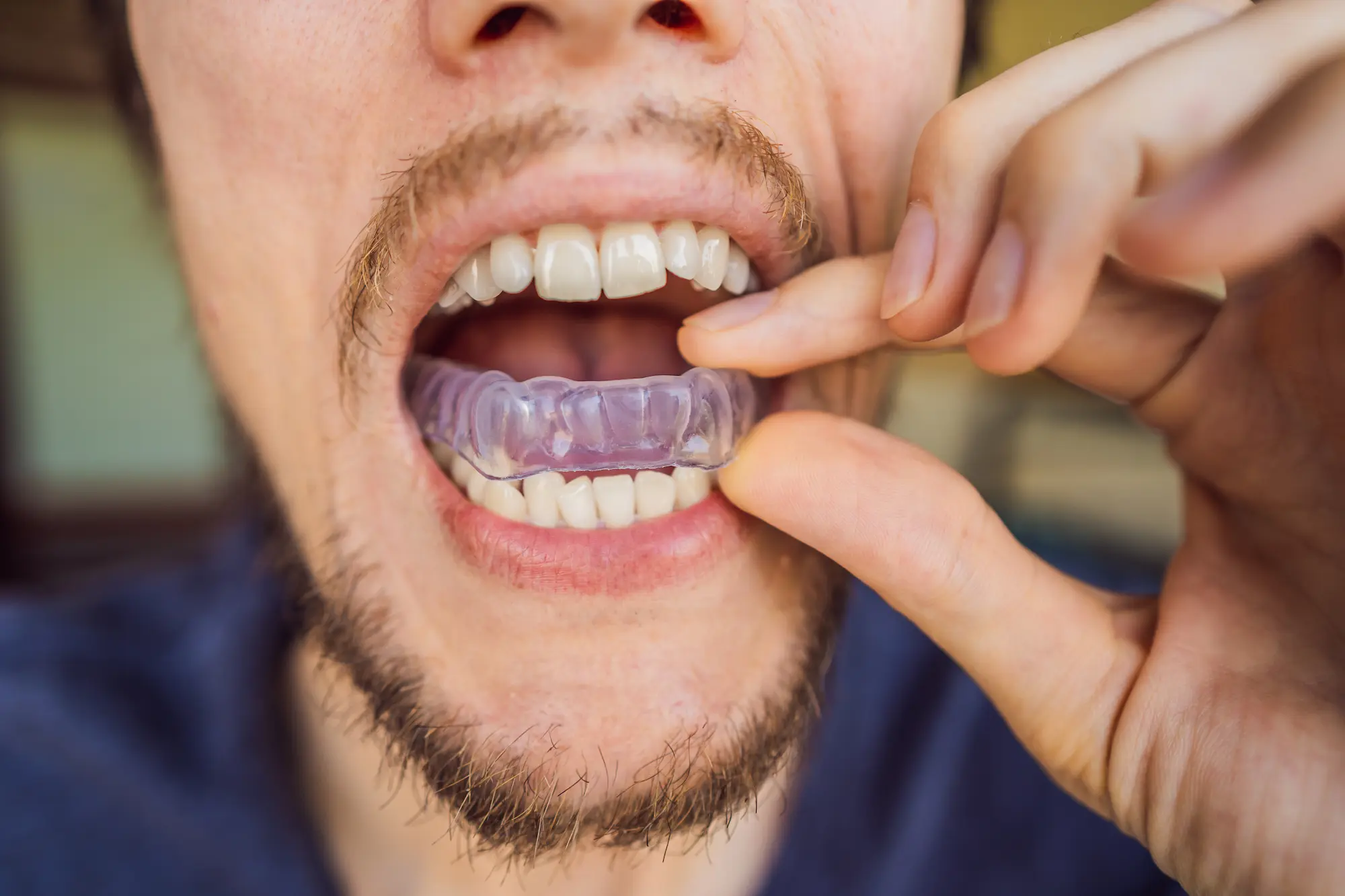
An occlusal guard is designed to protect teeth and the temporomandibular joint (TMJ) from the sustained, compressive forces of nighttime bruxism — the grinding and clenching that happens while you sleep. A sports mouthguard is fabricated from ethylene vinyl acetate (EVA) to absorb the sharp, unpredictable impact forces of a blow to the mouth during athletic activity. The phrase “occlusal sports guard” usually signals a patient who needs clarity on which type addresses their situation — or whether their full picture requires both.
Aurora sits at an unusual intersection of lifestyles that makes this question come up more than you might expect. The Buckley Road and E-470 corridors bring in time-pressed professionals who grind their teeth under sustained work pressure. Cherry Creek State Park draws weekend cyclists, runners, and recreational hockey players who need athletic protection every Saturday morning. At Aspenwood Dental Associates and Colorado Dental Implant Center, Dr. Aaron Sun regularly sees patients who are both — and guiding them toward the right solution, not the most convenient one, is exactly the kind of big-picture care that has defined this practice since 1972.
Why Aurora’s Climate and Active Lifestyle Make This Decision More Consequential
Colorado’s high-altitude, low-humidity environment dries out oral soft tissue faster than sea-level climates — a detail that matters more than most patients realize when evaluating whether a store-bought guard is truly adequate.
Boil-and-bite thermoplastic guards rely partly on a moist mucosal seal to stay seated against tooth surfaces. At Aurora’s elevation and in Colorado’s characteristically dry air, that seal degrades during play. A guard that fits at the sporting goods store on Buckley Road can shift mid-game at Cherry Creek, offering impact coverage that deteriorates precisely when contact sport demands it most. Custom-fabricated guards are mechanically retained by the precision fit of the acrylic or EVA to your exact tooth geometry — they hold regardless of ambient humidity, dry mouth, or how long you’ve been on the field.
Beyond fit, Aurora’s active adult population skews toward patients who have already invested significantly in their dental health. Implant-supported crowns, porcelain veneers, and full-arch restorations are common among the 45–65+ community in Heather Ridge, Piney Creek, and the Saddle Rock neighborhoods we serve. An OTC guard generates uneven pressure across biting surfaces; over weeks of games or months of nightly grinding, that uneven pressure can torque an implant crown or introduce lateral stress on a porcelain restoration. For patients who have made that investment, a custom guard isn’t a premium add-on — it is the maintenance plan.
Guard services calibrated for Aurora patients:
- Custom Occlusal Night Guards for Aurora Residents Managing Bruxism and TMJ Dysfunction
- Custom Athletic Mouthguards for Active Adults Protecting Implants and Restorations Near Cherry Creek State Park
- Dual-Guard Consultations for Heather Ridge and E-470 Corridor Patients Who Grind at Night and Play Sports on Weekends
- Transparent Insurance and Membership Pricing Reviews for Aurora-Area Guard Patients Without High-Pressure Consultations
Occlusal Guard vs. Sports Mouthguard vs. Over-the-Counter: What the Materials Actually Do
The material science between these three options is not a matter of degree — it is a matter of fundamental engineering purpose.
| Custom Occlusal Guard | Custom Sports Mouthguard | Boil-and-Bite OTC Guard | |
| Primary purpose | Nighttime bruxism / TMJ relief | Athletic impact absorption | General athletic protection |
| Material | Hard or dual-laminate acrylic | Ethylene vinyl acetate (EVA) | Low-grade thermoplastic |
| Fit precision | Digital impression | Digital impression | Approximated by heat molding |
| Bruxism protection | Yes | No — EVA compresses under sustained grinding | Marginal and inconsistent |
| Impact absorption | Not rated for athletic impact | Engineered for impact force dispersal | Inconsistent; not patient-tested |
| Safe over implants / crowns | Yes, when properly designed | Yes, when properly designed | Risk of uneven pressure on restorations |
| Typical lifespan | 3–5 years | 1–3 years | 6–18 months, often less |
A hard acrylic occlusal guard worn during contact sports creates a fracture and laceration risk on direct impact — the material that makes it ideal for grinding resistance makes it dangerous in an athletic collision. A soft EVA sports guard worn for bruxism compresses and bottoms out under the sustained clenching forces of sleep, providing no meaningful TMJ decompression. These are not interchangeable tools.
For patients who grind at night and play sports on weekends — a genuinely common profile among the active adults and commuter professionals Aspenwood serves — Dr. Aaron Sun’s standard recommendation is two separate custom appliances built from the same set of digital impressions. The efficiency of a single scan appointment, the protection of purpose-built design.
Colorado’s Dental Standards and What They Mean for Your Guard
Any custom dental appliance in Colorado — including occlusal guards and sports mouthguards — must be prescribed and overseen by a licensed dentist under the Colorado State Dental Board.
The Colorado State Dental Board, operating under the Colorado Department of Regulatory Agencies (DORA), requires that custom dental appliances be designed and dispensed within a clinical dental relationship — meaning a licensed Colorado dentist must evaluate your bite, your TMJ health, and your restorative history before a guard is fabricated in your name. The direct-to-consumer impression kits sold online, where no dentist ever evaluates your jaw or existing restorations, exist in a fundamentally different — and less accountable — regulatory category.
At Aspenwood Dental Associates and Colorado Dental Implant Center, every guard is prescribed by Dr. Aaron Sun, fabricated from digital impressions taken in our office, and reviewed and adjusted by Dr. Sun before it leaves the practice.
For over 54 years of Aurora dental care, Aspenwood has been recognized among 5280 Top Dentists — a peer-nominated recognition among Colorado dental professionals, received across multiple years by members of our clinical team.
How We Make Your Custom Guard: Three Steps at Our Aurora Office
Step 1: Digital Impression Appointment at 2900 S Peoria St Ste C
Your guard process begins with a digital scan of your full arch — no impression trays, no goop, no gagging. For patients commuting from the Nine Mile Station area on the RTD light rail, our office at 2900 S Peoria St Ste C is a short drive from the station and timed well for an appointment that fits before or after a commute. The scan itself takes approximately 10–15 minutes. Dr. Aaron Sun uses the digital data to review not just your tooth positions but your bite pattern, jaw alignment, and any existing crowns, implants, or veneers that must be accounted for in the guard design.
Step 2: Custom Fabrication with Restoration-Specific Design
Your impressions go to our dental lab with detailed prescription notes from Dr. Sun. For patients with implants or crowns — the majority of our 45–65+ guard patients in communities like Heather Ridge and Piney Creek — he specifies pressure distribution parameters that a one-size-fits-all OTC guard is physically incapable of providing. For patients who both grind at night and play sports regularly, he’ll typically prescribe two separate appliances from the same digital scan: a hard acrylic occlusal guard for sleep and an EVA sports guard for athletic activity. Building both from the same impressions taken in one appointment respects your time.
Step 3: Precision Fitting and Bite Verification
When your guard is ready — typically within one to two weeks — you return to our Aurora office for a seating appointment. Dr. Sun checks the fit at every contact point and makes chairside adjustments until the guard seats without deflection, without lateral force on any restoration, and without any discomfort. For patients with significant restorative work, this fitting step is not a formality. A guard that looks correct but introduces a 0.2mm lateral shift on an implant crown will cause cumulative damage over hundreds of wearing cycles. We verify before you leave the chair.
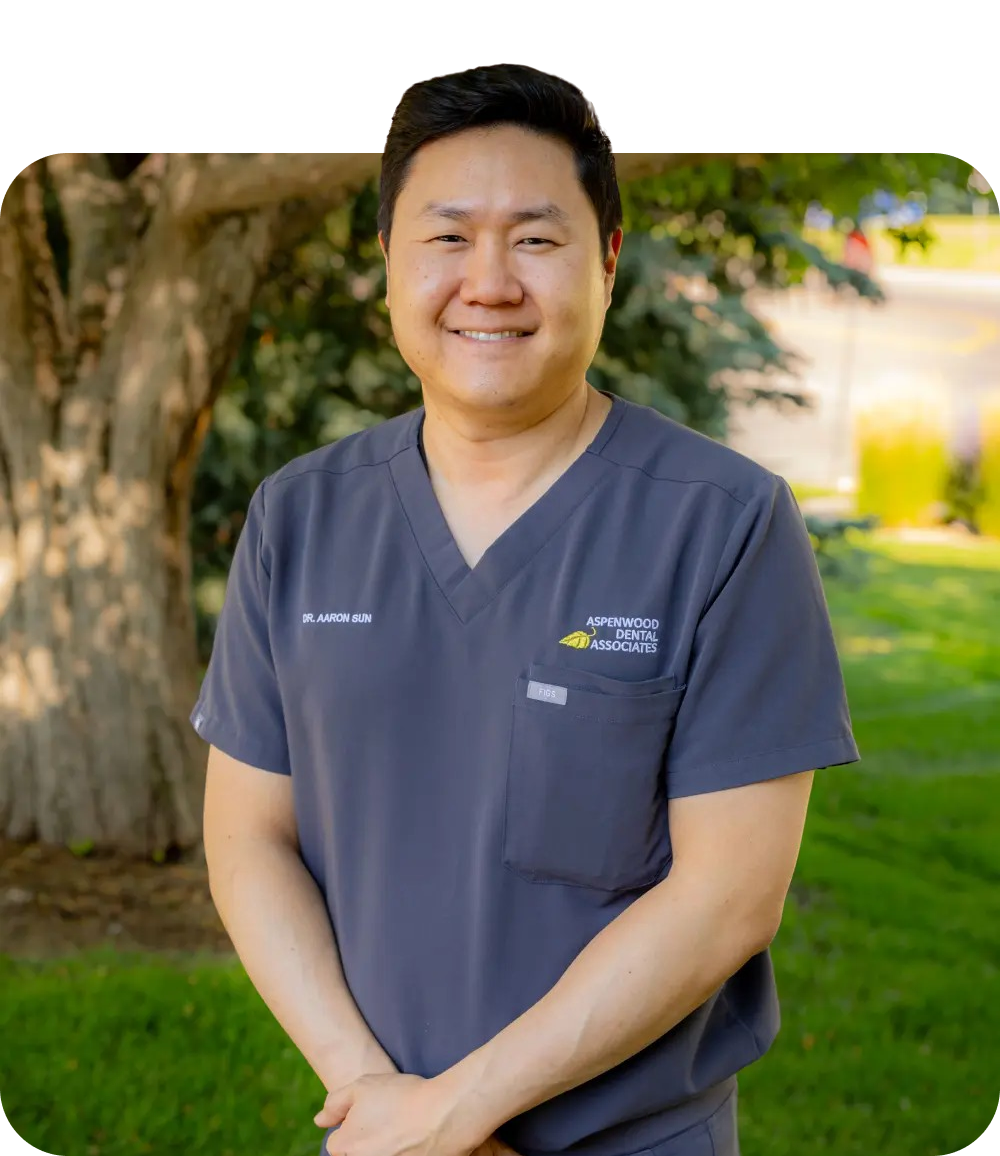
Meet Dr. Aaron Sun, DDS — Aspenwood Dental’s Lead Doctor for Guard Fabrication
Meet Dr. Aaron Sun, Aspenwood Dental Associates and Colorado Dental Implant Center’s Lead Doctor of Dental Surgery. Dr. Aaron Sun earned his Doctor of Dental Surgery degree from the University of Colorado and has been part of the Aspenwood clinical team serving Aurora and the greater Denver area. His approach to occlusal and sports guard consultations reflects the practice’s broader philosophy: understand the patient’s complete dental picture before recommending any appliance. In consultations and patient education videos, Dr. Sun is known for a calm, educational register — explaining the material science behind acrylic versus EVA in plain language, walking patients through the digital scanning process so there are no surprises, and making clear from the first conversation that his goal is lasting oral health, not a sale. He is a recognized 5280 Top Dentist, a peer-nominated designation among Colorado’s dental community.
Transparent Pricing and Insurance Coverage for Custom Guards in Aurora
Most dental insurance plans categorize custom mouthguards differently from standard preventive care — which is exactly why we review your specific coverage with you before a single impression is taken.
A custom occlusal night guard at a quality independent dental practice typically ranges from $300–$600. A custom athletic sports mouthguard typically ranges from $150–$400. These numbers vary based on material selection, the complexity of bite design, and whether existing restorations require special fabrication parameters. You will receive a written cost estimate — with applicable insurance codes — before any work is ordered.
Common insurance billing codes:
- D9940 — Occlusal guard, by report (custom night guard for bruxism/TMJ)
- D9941 — Athletic mouthguard, custom fabricated (sports mouthguard)
Coverage varies significantly by plan. Our team will verify your benefits directly and explain your actual out-of-pocket cost before you commit. For Aurora patients without dental insurance, or whose plan excludes custom appliances, Aspenwood’s in-house membership plan provides immediate savings on all services — no waiting periods, no deductibles, no third-party middleman driving up the cost. Financial flexibility. Full transparency. We cut out the third party to pass the savings directly to you.
Unlike corporate-owned practices that hold pricing back to create a consultation funnel, we have no interest in surprises. You should know what you’re paying before you sit in the chair.
Protecting What You’ve Built Starts With the Right Guard
For patients who’ve invested in their smile — through implants, crowns, or years of careful care — a custom occlusal or sports guard is not an upsell. It is the final piece of a comprehensive protection plan that ensures the work you’ve already done lasts as long as it should.
If you’ve been using a boil-and-bite guard from a sporting goods store near Buckley Road and your jaw still aches, or if you’ve been putting off getting a proper guard because you weren’t sure which type you actually need, we’re here to walk you through it without any pressure. We’ll explain every option, verify your insurance coverage before anything is ordered, and design a guard built around your specific dental history — not a generic template.
For patients who want long-term solutions, not temporary fixes — and for Aurora families who want a dental home that will still be here in ten years — Aspenwood Dental Associates and Colorado Dental Implant Center has been that practice since 1972.
Aurora and surrounding neighborhoods served for occlusal and sports guard consultations:
Heather Ridge, Seven Hills, Mission Viejo, Tallyn’s Reach, Saddle Rock, Piney Creek, Murphy Creek, Aurora Hills
Frequently Asked Questions About Occlusal Sports Guards in Aurora
What is the actual difference between an occlusal guard and a sports mouthguard — can I use one for both?
An occlusal guard is engineered to resist the sustained, low-velocity compressive forces of bruxism during sleep. A sports mouthguard is engineered from EVA to disperse the sudden, high-velocity impact forces of an athletic collision. The mechanics that make each one effective at its specific job make it ineffective — or actively dangerous — for the other. A hard acrylic occlusal guard worn during contact sports can fracture on impact and cause lacerations. A soft EVA sports guard worn during sleep will compress under clenching force and fail to protect the TMJ. For patients in Heather Ridge or along the E-470 corridor who grind at night and play recreational sports on weekends, Dr. Aaron Sun typically recommends two separate custom appliances — built from the same digital impressions in a single appointment — so each one does its job correctly.
Can I get a custom guard if I have dental implants or crowns?
Not only can you — if you have significant restorative work, a custom guard matters more for you, not less. Implants, crowns, and porcelain veneers represent a substantial health and financial investment. A boil-and-bite OTC guard creates uneven pressure across biting surfaces that, repeated night after night or game after game, can torque an implant crown, introduce stress fractures in a porcelain veneer, or create bite deflection around a restoration. A guard designed specifically around your restorations distributes forces away from them. This is the kind of care that goes beyond the chair — protecting what you’ve already invested in your smile.
Are boil-and-bite guards actually harmful, or just less effective?
For many patients, they are not simply “less effective” — they can actively worsen the conditions they’re supposed to address. Inconsistent fit produces lateral forces on teeth and restorations that, over hundreds of wearing cycles, can exacerbate TMJ dysfunction, accelerate tooth wear, and stress implant abutments. Many of the Aurora patients we see for guard consultations arrive having used an OTC guard for months, frustrated that their jaw still aches or their teeth still feel sore in the morning. The guard itself was contributing to the problem. The independent-minded patients in our practice who want to make their own informed decision appreciate hearing the material science explained plainly — not as a sales pitch, but as context for a choice that genuinely matters to their long-term health.
Does Colorado dental insurance typically cover custom mouthguards?
Coverage depends entirely on the specific plan. Many Colorado insurance plans categorize custom occlusal guards (D9940) as a TMJ-related benefit rather than standard preventive care, which may route it through a different coverage tier. Coverage for athletic mouthguards (D9941) is plan-specific and often excluded from general preventive benefits. The only reliable answer is a verification against your actual policy — which our team performs before any appliance is fabricated. You will have a written benefit breakdown and a written cost estimate in hand before any work begins. For patients on the Aspenwood membership plan, guard services are included within the plan’s discount structure with no waiting period.
How does Colorado’s dry, high-altitude climate affect which guard type I should use?
Colorado’s altitude and low-humidity environment reduces oral moisture faster than sea-level climates. This matters for guard selection because OTC thermoplastic guards depend partly on a moist mucosal seal to maintain their position against teeth. In dry conditions — on a Saturday at Cherry Creek State Park in July, or at altitude during a winter ski trip — that seal deteriorates, causing the guard to shift or unseat during activity. A custom-fabricated guard is retained mechanically by the precision fit of the material to your specific tooth geometry. It holds regardless of ambient humidity, dry mouth, or how long you’ve been active. For Aurora patients spending significant time outdoors in Colorado’s climate, this is a functional difference worth understanding.
What happens during a guard consultation at your Aurora office, and how long does it take?
Your initial guard consultation at 2900 S Peoria St Ste C typically runs 30–45 minutes. Dr. Aaron Sun will review your dental and jaw health history, assess your bite and TMJ, and use our digital scanning technology to take impressions — no impression trays, no goop, no gagging. If you have existing crowns or implants, he notes each one specifically in the lab prescription so the guard is built around them rather than over them. Most custom guards are ready for final fitting within one to two weeks. Patients traveling from near Nine Mile Station on the RTD light rail or from along the E-470 commuter corridor typically find the appointment fits into a morning window before their commute. We respect that you have a full day ahead.
If my guard wears out or gets damaged, do I have to repeat the whole process?
Not necessarily. Because Aspenwood maintains your digital impression data on file, replacement guards for established patients can often be fabricated from your existing scan record without scheduling a new impression appointment — a considerably faster and lower-friction process than your first guard. Occlusal guards typically last three to five years under normal grinding patterns; athletic mouthguards typically last one to three years depending on sport frequency and intensity. When you notice your guard thinning, losing its precision fit, or showing visible surface wear, schedule a quick evaluation before it fails completely — replacing a worn guard is always simpler than repairing the damage a failed one allows.