
Building the Foundation for a Lasting, Healthy Smile in Aurora, CO
Being told you need a bone graft before your dental implant can feel like an unexpected detour — and if you’ve had a frustrating experience with another practice in the past, that news can feel even heavier. At Aspenwood Dental Associates and Colorado Dental Implant Center, we’ve been guiding Aurora and Denver families through exactly this step for over 50 years. Bone grafting is one of the most routine and important procedures we perform, and our entire approach is built around making sure you understand every part of it before we begin.
This page is part of our full restorative dentistry services at Aspenwood Dental, where bone grafting sits as the essential foundation for long-term implant success.
Our Aurora office is accepting new patients. Call us or book online.
Why Aurora Implant Patients Often Need Bone Grafting First
Bone grafting is frequently a necessary step before dental implants because tooth loss — especially when it has gone unaddressed for months or years — causes the jawbone beneath the empty socket to gradually shrink. Without adequate bone volume and density, a dental implant has no stable foundation to anchor into, and the long-term result is compromised.
For patients in the Aurora and Denver metro area, this is a particularly common scenario. Many of the patients we see at our South Peoria Street office come to us after years of avoiding the dentist — sometimes due to cost, sometimes due to anxiety, and sometimes because a previous provider never explained what was happening beneath the surface. By the time they’re ready to move forward with implants, the bone has already begun to resorb. That’s not a failure on anyone’s part; it’s simply biology. And it’s exactly what bone grafting is designed to correct.
Unlike corporate implant chains that treat bone grafting as a line item to rush past, our team takes the time to walk you through exactly what we’re seeing on your imaging, why grafting is or isn’t necessary in your specific case, and what the timeline looks like from graft to final restoration. We’re not just here for a single appointment — we’re here to be your dental home for life.
Bone grafting services we provide for Aurora and Denver restorative patients:
- Bone Grafting as Part of All-on-4 Implant Preparation Under One Roof in Aurora
- Bone Grafting for Aurora Patients with Post-Extraction Bone Loss
- Socket Preservation Grafting Following Tooth Removal in the Aurora/Denver Area
- Sinus Lift Procedures for Upper Jaw Implant Preparation in Aurora, CO
- Ridge Augmentation for Full-Arch Restoration Candidates at Our S. Peoria St. Office
What Is Dental Bone Grafting? A Plain-English Explanation
Dental bone grafting is a surgical procedure that adds bone volume or density to an area of the jaw that has deteriorated, creating a stable base for a dental implant. The graft material — which may come from your own body, a donor source, an animal-derived source, or a synthetic substitute — is placed in the deficient area and, over several months, integrates with your existing bone tissue.
Here’s what that actually means for you as a patient: your jawbone is living tissue. When a tooth is lost or extracted, the bone that once surrounded that tooth’s root no longer receives the stimulation it needs to maintain its density. Over time — sometimes as quickly as six months — the bone begins to resorb, or shrink. A bone graft essentially tells your body, “there’s something here worth maintaining,” and triggers the natural regenerative process.
At Aspenwood Dental Associates and Colorado Dental Implant Center, Dr. Aaron Sun and our restorative team evaluate every patient’s bone volume using digital imaging before recommending any grafting procedure. We’ll walk you through every option so you can make the best decision for your smile — and we never recommend a procedure we wouldn’t recommend to our own family.
Types of Bone Graft Materials: What’s Right for You?
There is no single “best” bone graft material — the right choice depends on the size of the defect, your overall health, and your personal preferences. Here’s a straightforward breakdown of the four primary types:
Autograft (Your Own Bone)
Bone harvested from another area of your own body — typically the chin, the back of the jaw, or the hip for larger grafts. Because it’s your own tissue, it carries the highest biological compatibility and the best long-term integration rates. The trade-off is a second surgical site, which means a slightly longer recovery.
Allograft (Donor Bone)
Processed bone from a human donor, thoroughly screened and sterilized. This is one of the most commonly used graft materials in dental implant preparation because it eliminates the need for a second surgical site while still providing an excellent scaffold for new bone growth. Many patients feel uncertain about this option at first — it’s a completely normal reaction, and we’re happy to answer every question you have.
Xenograft (Animal-Derived Bone)
Typically sourced from bovine (cow) bone, xenografts are processed to remove all organic material, leaving only the mineral scaffold. They are widely used, well-studied, and safe. Like allografts, they provide a framework for your own bone to grow into over time.
Alloplast (Synthetic Bone)
Fully synthetic graft materials, often made from calcium phosphate or hydroxyapatite — the same mineral found in natural bone. These are an excellent option for patients who prefer to avoid donor or animal-derived materials entirely. They are biocompatible, predictable, and increasingly common in modern implant dentistry.
Dr. Aaron Sun will review the imaging from your consultation and explain which material makes the most clinical sense for your specific anatomy and implant plan. This is a conversation, not a prescription — and you’ll leave that appointment with a clear picture of exactly what we’re recommending and why.
The Bone Grafting Process at Aspenwood: Step by Step
Step 1: Comprehensive Imaging and Treatment Planning at Our Aurora Office
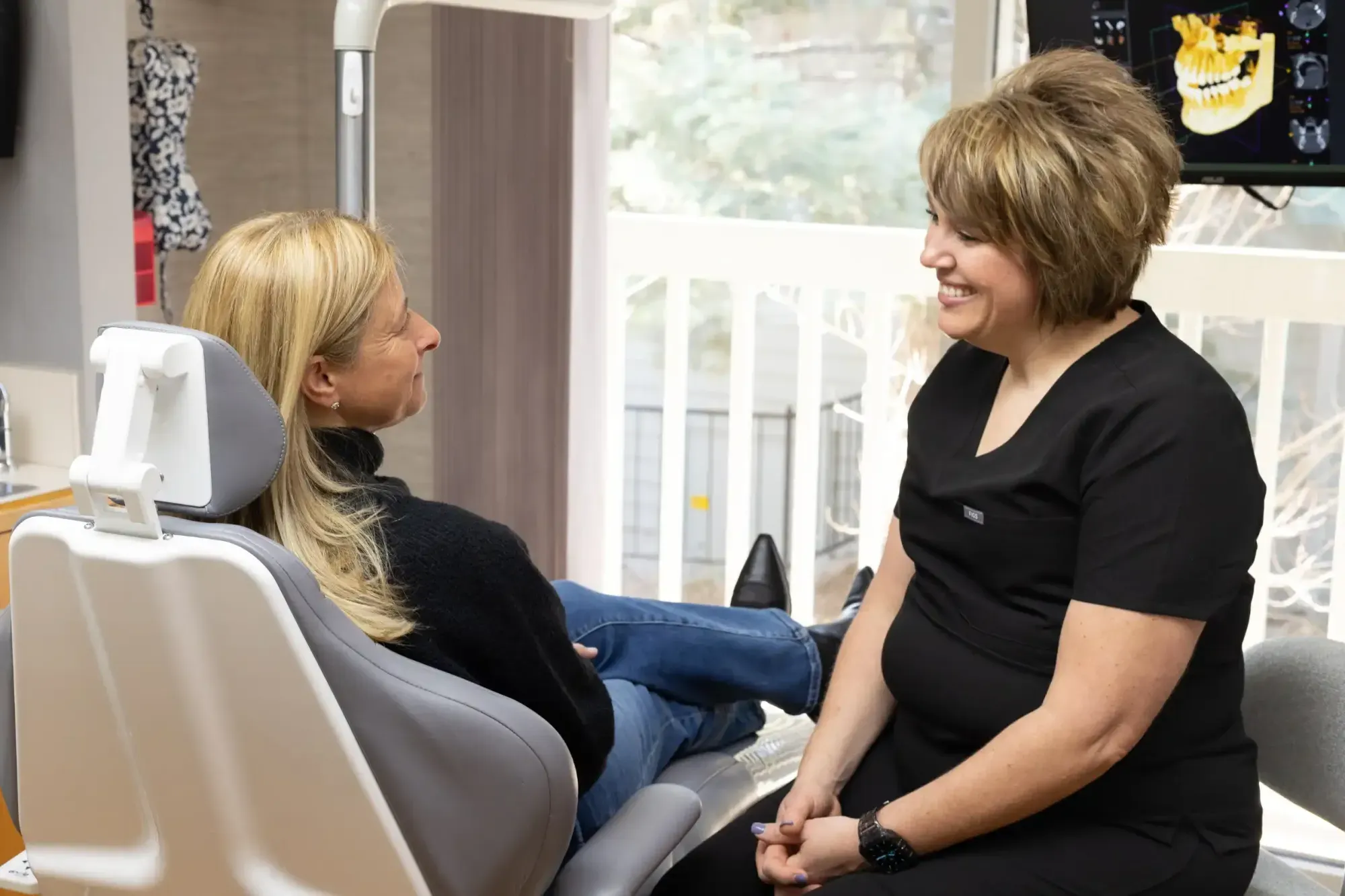
Before any procedure begins, Dr. Sun reviews your digital X-rays and, where appropriate, a cone beam CT scan to map the exact dimensions of your jawbone. This imaging tells us precisely where bone loss has occurred, how significant it is, and which grafting approach will give your implant the strongest long-term foundation. For patients coming to us from the Heather Ridge, The Dam neighborhood, or surrounding Aurora communities, this consultation is the starting point for your entire implant journey — and it’s the step that separates a thoughtful treatment plan from a rushed sales pitch.
Step 2: The Grafting Procedure — Gentle, Comfortable, and Explained in Full
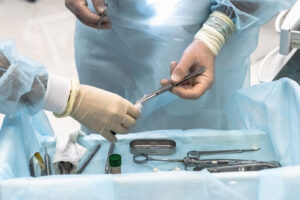
On the day of your procedure, you’ll be made comfortable before we begin. We offer sedation dentistry options for patients who experience dental anxiety — if you’ve had a difficult experience in the past, please tell us. Our team has heard it before, and we take it seriously. The grafting procedure itself involves a small incision in the gum tissue, placement of the graft material at the deficient site, and closure with sutures. For most patients, the procedure takes between 45 minutes and 90 minutes depending on the extent of grafting required. You will not feel pain during the procedure.
Step 3: Healing, Monitoring, and Implant Placement — All Under One Roof
After grafting, the integration period typically runs three to six months, during which your body incorporates the graft material into the existing bone structure. We schedule follow-up appointments to monitor your healing with updated imaging. Because Aspenwood Dental Associates and Colorado Dental Implant Center handles both the grafting and the implant placement in-house, you never have to coordinate between multiple specialists or re-explain your case to a new provider. When your bone is ready, we move forward — together.
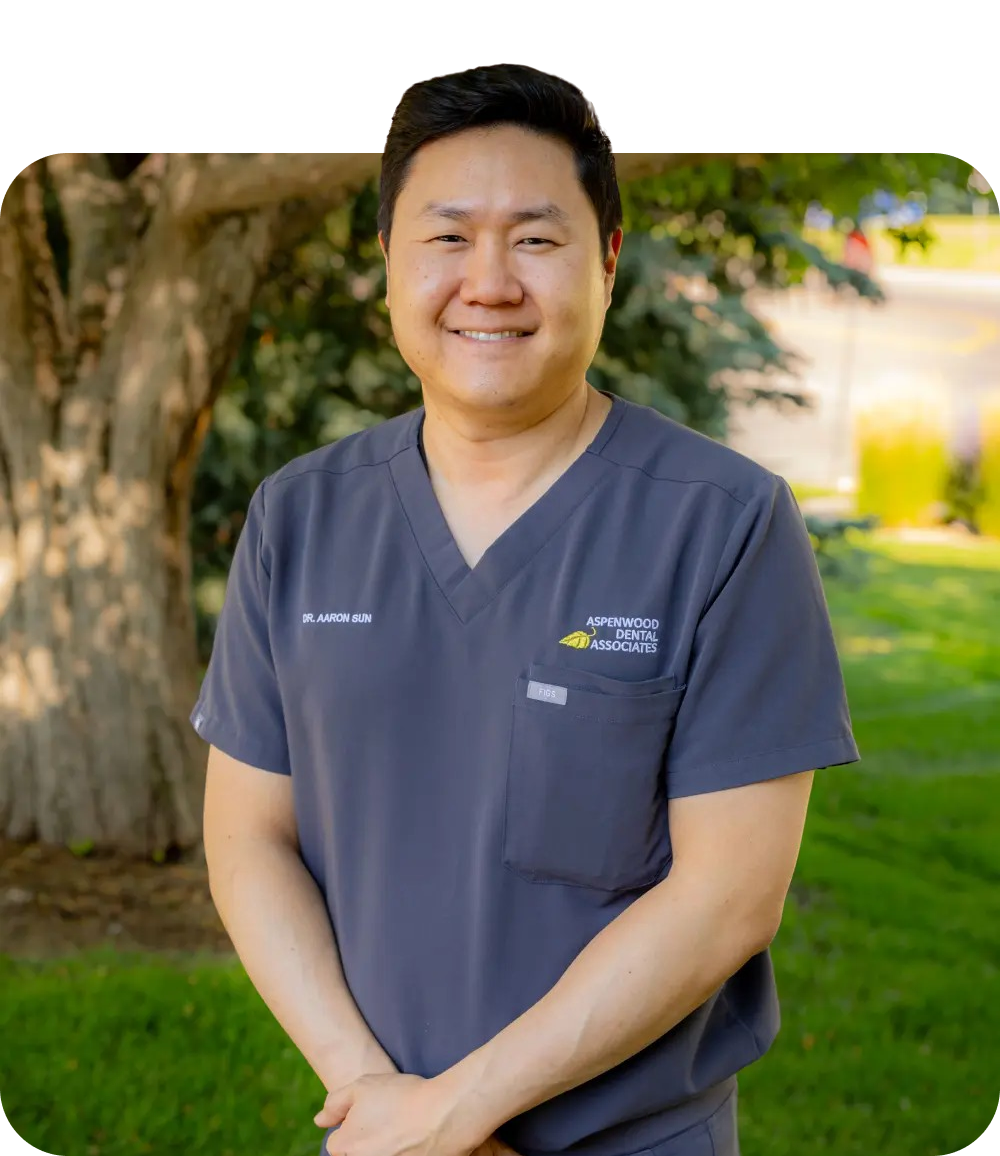
Meet Dr. Aaron Sun, Aspenwood Dental’s Lead Implant Dentist
Dr. Aaron Sun, DDS, is one of the implant dentists at Aspenwood Dental Associates and Colorado Dental Implant Center, where he has focused his clinical work on restorative procedures including dental implants, bone grafting, and full-arch reconstruction. His approach is straightforward: he believes patients make better decisions when they fully understand their options, so he takes the time to explain the biology, the process, and the timeline in plain language — not clinical shorthand. Dr. Sun is licensed through the Colorado Dental Board and has been recognized as part of the 5280 Top Dentist community.
How Much Does Bone Grafting Cost in Aurora, CO?
The cost of dental bone grafting in the Aurora and Denver area typically ranges from $300 to $3,000 per site, depending on the type of graft, the extent of bone loss, and whether additional procedures like a sinus lift are required.
| Graft Type | Typical Cost Range | Notes |
| Socket Preservation (at extraction) | $300 – $800 | Most affordable; done at time of tooth removal |
| Single-Site Allograft or Xenograft | $600 – $1,500 | Most common pre-implant scenario |
| Autograft (own bone harvest) | $1,500 – $3,000+ | Larger defects; second surgical site required |
| Sinus Lift (lateral or crestal) | $1,500 – $3,000 | Upper jaw implant preparation |
Does dental insurance cover bone grafting?
Many dental insurance plans classify bone grafting as a surgical or major restorative procedure and cover a portion of the cost — typically 50% after your deductible, up to your annual maximum. However, coverage varies significantly by plan, and some insurers require pre-authorization or classify grafting as “not medically necessary” for implant preparation. Our team will review your benefits before your procedure and give you a clear, written breakdown of your estimated out-of-pocket cost. No surprises.
What if I don’t have dental insurance?
Aspenwood Dental Associates and Colorado Dental Implant Center offers an in-house membership plan designed specifically for patients without traditional employer-sponsored coverage. Financial flexibility. Full transparency. We cut out the third party to pass the savings directly to you — so the absence of insurance doesn’t mean the absence of quality care.
Bone Graft Recovery: What to Expect in Aurora
Most bone graft patients experience mild to moderate discomfort for three to five days following the procedure, manageable with prescribed or over-the-counter pain medication.
Days 1–3: Swelling and tenderness at the graft site are normal and expected. Ice packs applied in 20-minute intervals help manage swelling. Stick to soft foods — yogurt, scrambled eggs, smoothies, mashed potatoes. Avoid anything crunchy, chewy, or hot.
Days 4–7: Swelling begins to subside. Most patients return to normal daily activity by day three or four. Avoid vigorous exercise for the first week, as elevated heart rate can increase bleeding at the surgical site.
Weeks 2–4: The graft site feels increasingly normal. Sutures may dissolve on their own or be removed at a follow-up appointment. Avoid direct pressure on the graft area while eating.
Months 1–6: The integration period. Your body is quietly doing the work — incorporating the graft material, building new bone cells, and preparing the site for implant placement. We monitor this progress with follow-up imaging at scheduled intervals.
Does Bone Grafting Hurt? Honest Answers for Anxious Patients
Bone grafting is performed under local anesthesia, which means you will not feel pain during the procedure itself. Post-operative discomfort is real but manageable — the majority of our patients describe it as similar to the soreness after a tooth extraction, not the sharp, acute pain they feared.
If you’ve been avoiding the dentist because of a bad experience somewhere else — whether that was a rushed procedure, a provider who didn’t explain what was happening, or simply feeling like you were just a number — we hear that. It’s one of the most common things patients tell us when they first come to Aspenwood. Our team has spent over 50 years building a practice where that experience is the exception, not the rule.
We offer sedation dentistry options for patients who experience significant dental anxiety, including nitrous oxide and oral conscious sedation. You don’t have to white-knuckle your way through this. Tell us what you’re feeling, and we’ll build a comfort plan around you.
Unlike corporate-owned practices focused on sales, our priority is your lasting oral health — and that includes making sure the journey to get there is as comfortable as possible.
Do I Really Need a Bone Graft for My Dental Implant?
Not every implant patient requires bone grafting — but many do, and the only way to know for certain is through a proper clinical evaluation with current imaging.
If you lost a tooth recently (within the last few months) and the socket was preserved at the time of extraction, you may have sufficient bone for immediate or early implant placement. If you’ve had a missing tooth for a year or more, or if your extraction site was not grafted, bone loss has almost certainly occurred — and the extent of that loss will determine whether grafting is necessary.
Some patients are told by high-volume clinics that they need extensive grafting when a more conservative approach would suffice. Others are told grafting isn’t necessary when it clearly is, because the clinic wants to move quickly to the more profitable implant placement. Neither scenario serves you.
At Aspenwood Dental Associates and Colorado Dental Implant Center, Dr. Sun’s evaluation is built around one question: what does this specific patient’s jaw actually need to support a successful long-term implant? We’ll show you the imaging, explain what we’re seeing, and give you our honest recommendation — even if that recommendation is “you don’t need a graft.”
Bone Grafting and Your Path to Dental Implants
Bone grafting is not the destination — it’s the foundation. For patients preparing for single dental implants, multiple implants, or full-arch restoration like All-on-4, the graft is the step that makes everything else possible.
Because Aspenwood Dental Associates and Colorado Dental Implant Center provides both the grafting procedure and the implant placement in-house, your care is continuous. Dr. Sun and the restorative team who evaluate your bone health are the same team who will place your implant. There are no referrals to outside specialists, no gaps in your records, and no starting over with a new provider who doesn’t know your history.
For patients who have been told they need a bone graft before implants and want to understand what that means for their timeline, our blog post on restoring bone tissue after an extraction walks through exactly what happens to the jawbone after tooth loss and what the implant preparation process looks like. For older patients specifically, our guide on safe implant preparation for seniors addresses the unique considerations that come with age-related bone density changes.
Serving Aurora and the Surrounding Denver Communities
Aspenwood Dental Associates and Colorado Dental Implant Center has been a fixture in the Aurora community since 1972. Our office on S. Peoria Street serves patients from across the Aurora and Denver metro area, including the neighborhoods of Heather Ridge, The Dam neighborhood, and communities near Cherry Creek State Park and Nine Mile Station (RTD Light Rail).
Aspenwood Dental Associates and Colorado Dental Implant Center
2900 S Peoria St Ste C, Aurora, CO 80014, United States
4.9 stars | 1,600+ Google Reviews | 5280 Top Dentist — Multiple Recognitions




Frequently Asked Questions: Bone Grafting in Aurora, CO
Does Aurora’s altitude or Colorado’s dry climate affect bone graft healing?
Colorado’s high altitude and low humidity can affect post-surgical healing in subtle ways — primarily through increased dehydration and slightly reduced oxygen availability compared to sea level environments. For bone graft patients at our Aurora office, we emphasize aggressive hydration in the post-operative period and provide specific guidance on managing dry mouth and nasal dryness, which can indirectly affect oral wound healing. These are not reasons to avoid the procedure — they’re simply factors our team accounts for in your aftercare instructions.
What permits or oversight apply to oral surgical procedures like bone grafting in Colorado?
Bone grafting performed in a dental office in Colorado falls under the regulatory authority of the Colorado Dental Board, which licenses and oversees all dental practitioners performing surgical procedures in the state. Dr. Aaron Sun holds a DDS license issued by the Colorado Dental Board. All procedures at Aspenwood Dental Associates and Colorado Dental Implant Center are performed in compliance with Colorado Revised Statutes Title 12, Article 220 (Dentists), which governs the scope of dental surgical practice in Colorado.
How does bone loss from long-term tooth loss affect implant eligibility for Aurora patients?
This is one of the most common scenarios we see at our S. Peoria Street office. Patients who lost teeth years ago — before implants were as accessible or affordable as they are today — often arrive with significant bone resorption in the affected area. The good news is that modern bone grafting techniques can rebuild adequate bone volume in the vast majority of cases, even after years of loss. The extent of grafting required will depend on how much resorption has occurred, which is why current imaging is the essential first step.
Can my body reject a dental bone graft?
True immunological rejection — the kind associated with organ transplants — does not occur with dental bone grafts because the graft materials used (including allografts and xenografts) are processed to remove all living cells that could trigger an immune response. What can occur is graft failure, which is different: the graft material does not integrate successfully with the surrounding bone, often due to infection, mechanical disruption of the site, or underlying health factors like uncontrolled diabetes or heavy smoking. Our team reviews your full health history before any grafting procedure specifically to identify and mitigate these risk factors.
Is bone grafting covered under Aspenwood’s in-house membership plan?
Aspenwood Dental Associates and Colorado Dental Implant Center’s in-house membership plan is designed primarily to cover preventive care and provide discounts on restorative and surgical procedures, including bone grafting. The specific discount structure for surgical procedures like bone grafting is part of your membership benefits — our team will walk you through exactly what your plan covers and what your estimated out-of-pocket cost will be before any procedure is scheduled. Financial flexibility. Full transparency.
What’s the connection between bone grafting and All-on-4 dental implants?
For patients considering full-arch restoration with All-on-4 implants, bone grafting is sometimes — but not always — required. The All-on-4 technique is specifically designed to maximize the use of available bone by angling the posterior implants, which often reduces or eliminates the need for extensive grafting compared to traditional full-arch implant approaches. Whether grafting is necessary in your specific case depends on your current bone volume and density. Because Aspenwood Dental Associates and Colorado Dental Implant Center handles both procedures in-house, your treatment plan is built around your actual anatomy — not a one-size-fits-all protocol.
What should I expect at my first bone grafting consultation at your Aurora office?
Your first appointment at our 2900 S Peoria St Ste C location will include a review of your dental and medical history, current digital imaging (X-rays and, if indicated, a cone beam CT scan), and a conversation with Dr. Sun about what the imaging shows and what your options are. You will leave that appointment with a clear understanding of whether bone grafting is necessary, what type of graft would be recommended, what the procedure involves, and what the timeline looks like from graft to final implant restoration. There is no pressure and no obligation. Our goal at that first visit is simply to make sure you have the information you need to make the right decision for your smile.