

Key Takeaways
- An average tells you very little, because the scope of the procedure changes with how much natural tooth remains, the material, the workflow and what else has to happen first.
- A core buildup is a separate procedure with its own code and is the most common reason a final invoice exceeds the original quote.
- Crowns sit in the major services tier, which brings a deductible, the lowest coinsurance rate in the plan, a draw on the annual maximum and often a waiting period.
- An alternate benefit provision lets a plan pay based on a less expensive procedure it considers adequate rather than the one performed, and the difference lands on you.
An average is close to useless here, and it is worth understanding why before you go looking for one. A crown quote covers a procedure whose scope changes depending on what is left of the tooth, what the crown is made of, whether other work has to happen first, and how your plan chooses to pay for it. Two people in the same neighborhood can be quoted very differently for the same-sounding procedure, and both quotes can be correct.
What is more useful than a number is knowing what changes it. There are five things that move the figure, one insurance clause that surprises people at the end, and a short list of questions that get you an accurate estimate before you sit down. Aspenwood Dental Associates and Colorado Dental Implant Center has been an independent practice in Aurora since 1972 with an on-site laboratory, and full-price transparency is something we commit to in writing.
The five things that change the number
1. How much tooth is left
This is the largest variable and the one people never anticipate. A tooth that has lost most of its structure to decay or an old restoration usually needs a core buildup before a crown can be fitted, because a crown needs something to sit on. A buildup is a separate procedure with its own code and its own fee, and it is one of the most common reasons a final invoice exceeds the original quote.
If very little tooth remains above the gumline, crown lengthening may be needed as well, which is a surgical procedure and may involve a referral. Neither of these is padding. They are what makes the crown survivable.
2. What the crown is made of
All-ceramic, layered ceramic, zirconia, metal-ceramic, and full-gold restorations differ in laboratory cost and in what they suit. Material selection is a clinical decision driven by the position of the tooth, how much space there is, how heavily you grind, and what the tooth next to it looks like. A material chosen purely on price is a false economy in a molar taking a heavy bite.
3. Whether it is milled in-house or made in a laboratory
Same-visit milled crowns and laboratory-fabricated crowns are different workflows with different cost structures and different indications. Neither is automatically better. What matters is that the workflow suits the case, and that you understand which one you are being quoted for. Our own arrangement is described on the crown and bridge laboratory page and the same-visit option on the same day crowns page.
4. What else has to happen first
A crown on a tooth that also needs a root canal is two procedures, sometimes three once a post and core is included, each billed separately and each covered differently. Gum treatment before crown work is another separate item. When people say a crown cost far more than they expected, this is usually where the difference sits.
5. Whether it is on a natural tooth or an implant
An implant crown is a different procedure with different components, including an abutment, and it is covered very differently by dental plans. Comparing an implant crown quote to a crown on a natural tooth is comparing two unrelated things.
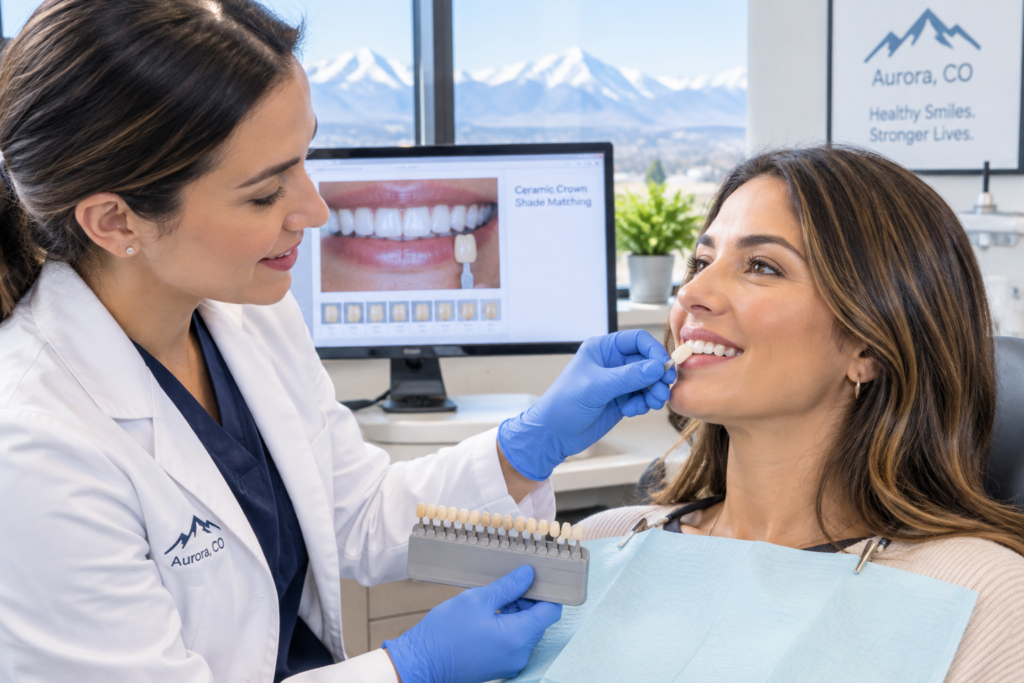
How dental plans handle crowns, and the clause worth knowing
Crowns almost always sit in the major services tier, which is the least generously covered one. That means a deductible, the lowest coinsurance percentage in the plan, a draw against the annual maximum, and often a waiting period for newly enrolled members. Preventive care starting immediately leads a lot of people to assume the rest does too.
Then there is the clause that catches people out. Many plans carry an alternate benefit provision, which allows the carrier to calculate its payment based on the least expensive procedure it considers adequate rather than the one performed. In crown work, that typically means the plan pays as though a different material had been used, and the difference lands on you. It is legal, it is disclosed in the policy documents, and almost nobody reads it before treatment.
Two more things worth asking about. Plans commonly limit how often a crown on the same tooth can be replaced, often measured in years. And a crown placed for appearance rather than to restore a damaged tooth is generally treated as cosmetic and excluded.
For adults on Health First Colorado, crowns do appear on the published adult benefit for members aged 21 and over, marked as requiring prior authorization, alongside extractions, root canals, dentures and periodontal scaling. The Department of Health Care Policy and Financing states that effective July 1, 2026, adult members have a $3,000 yearly benefit limit running July 1 to June 30. The detail is on the state’s dental benefits page.
How long a crown lasts, and why we will not give you a number
You will find confident figures for this all over the internet, and we are deliberately not adding one. Reported longevity varies with the material, the position of the tooth, how much natural tooth structure was left underneath, whether the tooth is root treated, how heavily the patient grinds, and how well the margins are maintained. A figure quoted without those conditions attached is not information.

What is worth saying is what tends to end a crown’s life, because most of it is addressable. The common causes are decay starting at the margin where the crown meets the tooth, fracture of the remaining tooth structure underneath, and failure of the cement seal. Flossing around the margin, wearing a night guard if you grind, and keeping recall appointments so a small marginal problem is caught early are the three things within your control. A crown that fails at the margin is often re-treatable if it is found early and a much bigger problem if it is not.
A crown is a restoration, and restorations are replaced at some point. Anyone promising otherwise is describing a hope rather than a plan.
Six questions that get you an accurate estimate
- Ask for an itemized written estimate with procedure codes, listing the crown, any buildup, any post, and any other procedure separately. One number for the whole thing is where the trouble starts.
- Ask directly whether a buildup is expected, and what happens to the estimate if one turns out to be needed once the old filling is removed.
- Ask which material is planned and why that one for this tooth.
- Ask whether the crown will be milled in-house or sent to a laboratory, and what that means for the number of appointments.
- Ask the office to submit a pre-treatment estimate to your plan, and specifically whether an alternate benefit provision applies.
- Ask about the replacement frequency limit on your policy if this crown is replacing an existing one.
Any practice should answer all six without hesitating. If a quote comes without an itemized breakdown, that is worth pushing on before treatment rather than after. What crown treatment involves here is described on our dental crowns page, and the payment routes we offer on the financial information page and the membership plan page.
When a crown is not the right question
Occasionally the honest answer is that a crown is not what the tooth needs. A smaller restoration such as an inlay or onlay may be enough where the damage is contained, which preserves more natural tooth. At the other end, a tooth that is cracked below the gumline or has lost too much support may not be restorable at all, and finding that out before spending on a crown matters.
This is why an examination and radiographs come before a price. A number given over the phone for a tooth nobody has looked at is a guess with a decimal point on it.
How Aspenwood quotes a crown in Aurora
No figure is given for a tooth nobody has looked at. The sequence is an examination, the imaging that is warranted, and then an itemized written estimate that lists the crown, any buildup, any post and anything else as separate lines, so you can see what is driving the number.
Where a buildup may or may not be needed depending on what is found once an old restoration comes out, you are told that in advance along with what it would do to the estimate. Having a laboratory on site means the workflow question is a clinical decision rather than a scheduling one, and we will tell you which route is planned and why. If an inlay or onlay would preserve more tooth than a crown, that is what we will recommend.
Frequently Asked Questions
Why won’t a dentist quote a crown price over the phone?
Because the scope of the procedure depends on findings that require an examination and radiographs. How much natural tooth remains determines whether a core buildup or crown lengthening is needed, and those are separate procedures with separate fees. Whether a root canal is required changes it again. A practice can explain what a straightforward crown involves and should, but a figure given for a tooth nobody has examined is a guess.
What is a core buildup and why is it billed separately?
A core buildup rebuilds the foundation of a tooth that has lost significant structure to decay or an old restoration, so that a crown has something solid to sit on. It is a distinct procedure with its own code, so it appears as its own line on the estimate. It is one of the most common reasons a final invoice exceeds an initial quote, which is why it is worth asking about before treatment rather than discovering it afterwards.
Does dental insurance cover crowns?
Usually partly. Crowns sit in the major services tier, which typically carries a deductible, the lowest coinsurance percentage in the plan, a draw on the annual maximum, and often a waiting period for new members. Many plans also apply an alternate benefit provision, calculating payment based on the least expensive procedure the carrier considers adequate rather than the one performed. Crowns placed purely for appearance are generally excluded as cosmetic.
What is an alternate benefit provision?
It is a clause allowing a dental plan to base its payment on a less expensive procedure it considers adequate for the situation, rather than on the treatment actually provided. In crown work that often means the plan pays as though a different material had been used, with the difference falling to the patient. It is disclosed in policy documents and is a fair question to raise with your carrier before treatment, ideally through a pre-treatment estimate.
Does Health First Colorado cover crowns for adults?
Crowns appear on the published adult dental benefit for members aged 21 and over, marked as requiring prior authorization, alongside extractions, root canals, partial and complete dentures and periodontal scaling. The Department of Health Care Policy and Financing states that effective July 1, 2026 adult members have a $3,000 yearly benefit limit running from July 1 to June 30, with emergency services and dentures not counting toward it.
How long does a dental crown last?
Reported longevity varies considerably with the material, the position of the tooth, how much natural tooth structure remains underneath, whether the tooth has been root treated, grinding habits and how well the margins are maintained. A single figure quoted without those conditions attached is not meaningful. What is useful to know is that crowns most often fail through decay at the margin, fracture of the tooth underneath, or loss of the cement seal, and that regular recall appointments catch the first of those early.
Get an itemized estimate before anything is prepared
If a crown has been recommended and you want to know what it actually involves for your tooth, book a complimentary consultation. We will examine, take the imaging that is warranted, explain whether a buildup or anything else is likely, and give you an itemized written estimate before treatment is scheduled. Reach us through the contact page or call (303) 529-2913.
Suggested previous post: How to Afford Full Mouth Restoration in Aurora
Suggested next post: Does Dental Insurance Cover Teeth Whitening?
 Does Insurance Cover Dental Extractions in Aurora?